
9 ideas for blank-screen projects in elementary
"I love the sweet, expectant nothingness of an empty page."
- Peter H. Reynolds
Wixie is a digital canvas that students can use to combine their writing, their voice, and their art. Wixie gives students tools they can use to demonstrate their understanding in the classroom, as well as share ideas, express themselves, inform others, and change minds.
To use a blank canvas in Wixie, simply have students click the New button at their home page and choose the orientation they would like to use.
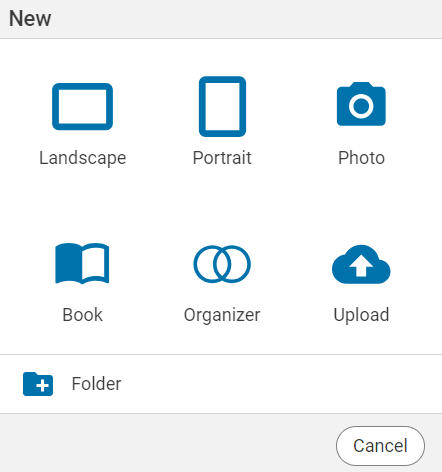
If your students use the primary interface, they will see a + button at the top of their home page to start a new project in landscape mode.

Here are nine ideas for projects that will get your elementary learners comfortable starting to create from a blank canvas.
1. Visualize vocabulary
According to Allan Paivio’s dual coding theory, if we code a word or concept into memory in two different ways, such as text and images, we improve our brain’s ability to remember it. Wixie makes it easy for students to combine text and images to help them visualize and better remember the meaning of words and phrases like:
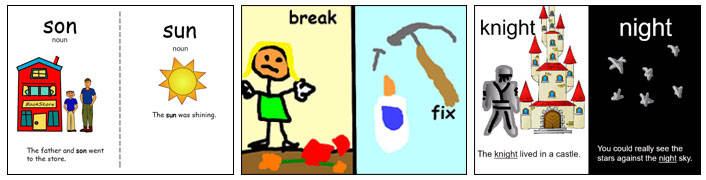
You can code the meaning even further by having students use the recording tools to narrate a definition or use the word in a sentence or two.
Students can add terms and definitions using the Text tool on the toolbar.

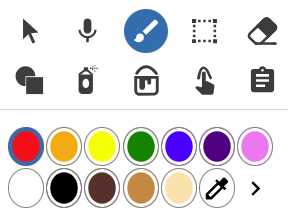
Students can use the paint tools to design original illustrations that represent meaning.
2. Illustrate word problems
Visualizing word problems can help students better identify key pieces of a problem and the relations between them. Students can easily use the paint tools to draw models representing the text in a word problem. Students can also use the recording tool to explain their mathematical thinking and reasoning.
Even better, ask students to use the text and imaging tools to design their own word problems. As they work to create the structure, write, and visualize the problem, they build a better understanding of how the words and their relationship represent mathematical problems.
3. Create scientific infographics
Constructing their own models and diagrams requires higher-order thinking skills and helps students organize and better comprehend information. This type of performance task also helps you evaluate student understanding.
In today's information age, infographics have become a popular way to communicate complex ideas and make large quantities of data understandable. Infographics can also be statements of priority and action.
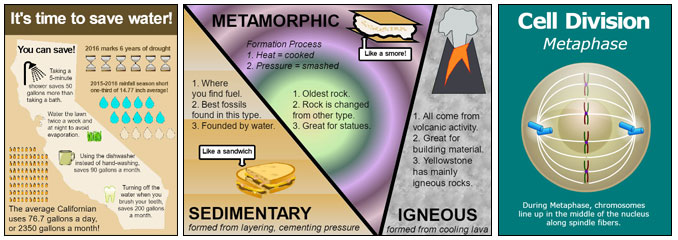
Ask your students to take data from their research and use the paint tools, images, and text options to convey information in a way that is easy to understand.
Students can click the Image button to find and add images to support their ideas quickly.

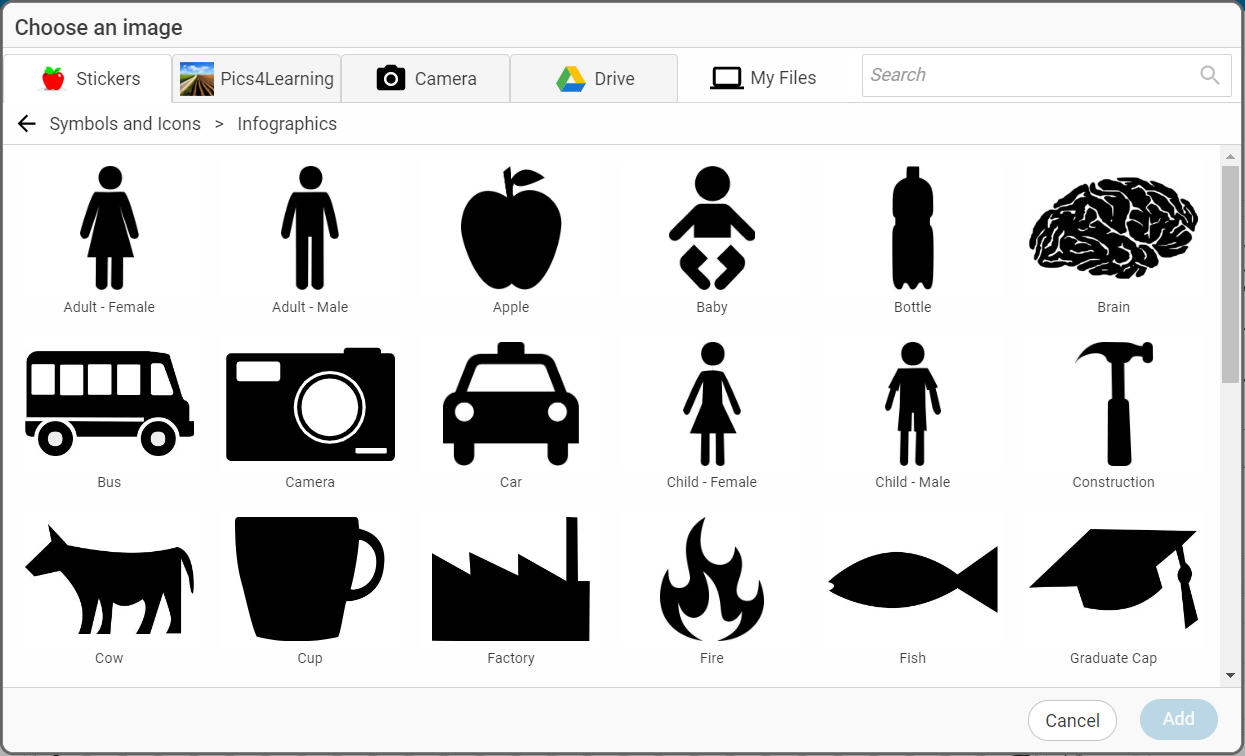
The Image library contains thousands of images, including an infographics library, which students can use to quickly represent data and information.
4. Think about content with an If/But comparative report
In an If/But report, students compare things like animals, people, places, or events using a first-person narrative. For example, “If I was a polar bear, I would live on arctic ice, and you would hardly be able to see me because of my white coloring…. But I wouldn’t sit on my eggs for over a month…”
“Identifying similarities and differences” is an effective way to help students remember and understand content (Marzano et al. 2001). It also encourages deeper conceptual thinking (Webb’s Depth of Knowledge).
Starting with a blank page can be intimidating for some learners. If this is your student’s first blank screen project, you may want to have them first organize their research and thinking using the Venn Diagram available in their Templates library.
5. Connect geometric transformations and art
Math is way more than rote memorization and rules. Connect math with beauty and help students "look for and make use of structure" (CCSS.MATH.MP7) by asking them to paint with symmetry and explore additional geometric translations by creating their own Escher-esque tessellations.
We often ask students to identify linear or radial symmetry in the objects in the world around them. While an effective formative assessment for teachers, it's not very exciting or engaging for students. Instead, ask students to try to paint these objects using the symmetry tools.
To paint with symmetry, have students select the paint brush tool and use the symmetry options.

Most students will recognize the art of M.C. Escher, and many can even name the artist. Capitalize on this familiarity by asking students to learn geometric transformations through the creation of their own tessellations.
It is easy to use the paint and selection tools to create reflection, rotation, and translation tessellations. Explore more in this Tessellation Sensation lesson plan or these step-by-step directions for creating rotation and reflection tessellations.
6. Create visual poetry
Poetry is a great way to introduce students to imagery and precise language. As a fun performance task for students to demonstrate comprehension of vocabulary, word choice, and figurative language, ask them to create visual versions of the poetry they are reading.
Have students work in teams to choose a poem, reread it, and discuss the author's use of imagery and precise language. Then, ask students to create a page, type a single line or stanza from the poem, and add images that help the viewer understand the author's intent.
Effective visual poems quickly develop into multi-page projects. Students click the Add Page button to add additional blank pages to their projects.
7. Retell in comic form
Comics are a popular medium that can help you connect student learning to the classroom. Creating a comic strip is a great way to get students thinking about the stories or informational texts they are reading.
The limited space in comic panel requires students to choose the most significant points in a text or story. Comics also require students to use images to support and extend the meaning of the text they are sharing. Again, research by Marzano et al. 2001 shows that as they work to summarize and use nonlinguistic representations, students improve their recall and comprehension.
8. Write and illustrate a fictitious interview
Crafting a fictitious interview is a fun way to connect students with the stories or informational content they are learning. For example, students could interview a person from history, an animal, a character from a book, or even a historic artifact or structure.
Because the answers they create for their interviewee are in the first person, it is difficult for students to simply copy and paste facts. To be interesting and effective, students must empathize with and personify the person, place, or thing they are interviewing.
Rather than answering the questions you provide, require students to develop the interview questions themselves to gain practice in inquiry. This also helps you evaluate how well they understand the big ideas behind the facts they find.
9. Change minds with a public service announcement
Students want to see how the content and skills they are learning in the classroom connect to the world. Combine their budding skills as informational and argumentative writers with their passions by asking students to craft public service announcements that raise awareness, inform, and change behavior on topics like conservation, health, and social issues.
To create effective messages, students must: research thoroughly, identify fact versus opinion, develop claims and the evidence to back them, and consider their audience. Creating a PSA also requires students to practice skills in all four dimensions of the C3 Framework for Social Studies State Standards.
Dimension 1. Developing Questions and Planning Inquiries
Dimension 2. Applying Disciplinary Concepts and Tools
Dimension 3. Evaluating Sources and Using Evidence
Dimension 4. Communicating Conclusions and Taking Informed Action
Since Wixie works online, student work is published instantly. Share student work by sharing the project URL in an email, a social media post, or by embedding the project on your classroom web page.
Build creative capacity with a blank screen
A blank screen can be empowering to your learners, transferring responsibility for learning to students as they use Wixie's canvas and tools to demonstrate learning and share ideas. As they grow in their abilities, push them to share their knowledge and ideas to better their communities and change the world.