
Using Wixie with a 6+1 trait writing approach
Designed by teachers and educators at the Northwest Regional Educational Laboratory, the 6+1 Trait® Writing Model of Instruction & Assessment organizes writing skills into seven "traits" that provide a common language for writing instruction.
The traits are:
- 1. Ideas
- 2. Organization
- 3. Voice
- 4. Word Choice
- 5. Sentence Fluency
- 6. Conventions
- 7. Presentation
Using these traits can help students see techniques of great writing and take action to build specific skills that improve their writing.
Here are ways you can use Wixie to help students practice and support skills building for each of the traits.
Ideas
The Ideas trait refers to a combination of a strong main message with supporting details that are interesting, important, and informative. Strong use of ideas in writing means students are able to "show" and not just "tell" their readers.
Using the folder of graphic organizer templates can help students identify the main idea they are trying to convey, as well as brainstorm details that support this main idea and bring it to life. Graphic organizers like clusters, burger writing, and the 5 W's can help students brainstorm details and see how they connect to and support their main idea.
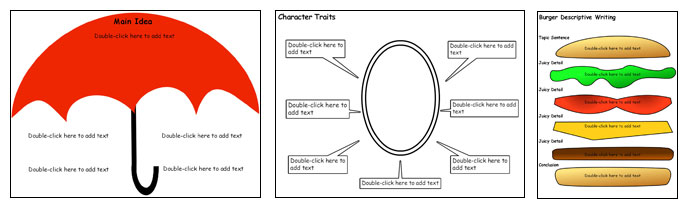
Assign specific graphic organizer templates so students can immediately begin developing their ideas. As they grow in their pre-writing skills, empower students to open and create their own graphic organizers from the Design Templates library.
Organization
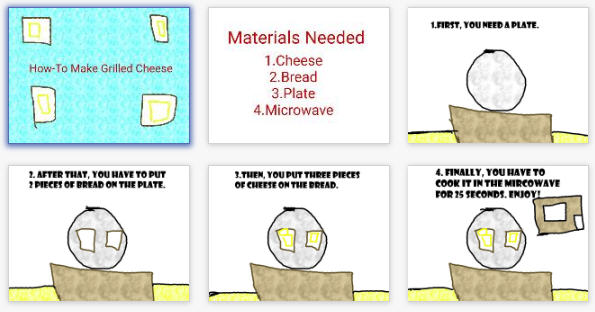
Organization refers to the structure of writing. Use graphic organizer templates, such as a plot diagram or sequence, to help students develop writing where events proceed logically, information is given to keep the reader interested, and the conclusion has a resolution to the problem.

As students are develop their writing, they can use the storyboard view to get an overview of how their story or information is organized and rearrange the order of the pages.
Voice
Voice refers to the sense that a real person is talking to us and cares about the message being conveyed in the writing. This is not about sharing the author’s personality but imparting a tone and flavor in our writing that is directed at a specific audience for a specific purpose.
You might begin by having students find and use their own voice through opinion, persuasive, or argument writing. For example, in this public service announcement, the reader can obviously hear how the narrator feels and wants the audience to feel about protecting and saving the Florida panther.
When focusing on narrative writing, build this skill through writing projects that ask students to take a first-person perspective for their main character, whether they are writing original stories, personifications, or even retelling fables.
Interviews and diaries are powerful ways to build voice into informational writing and help students see how voice can make their writing more interesting.
Word Choice
Word choice refers to the vocabulary a writer uses to convey specific meaning and emotion. Students need to learn to use precise vocabulary and colorful and vivid descriptions to help readers understand their intentions.
Wixie includes Frayer-model vocabulary templates and even a Wanted poster template you can use for explicit vocabulary instruction. Students can combine text, images, voice narration, and video to define terms, visually demonstrate meaning, identify synonyms and antonyms, and more.
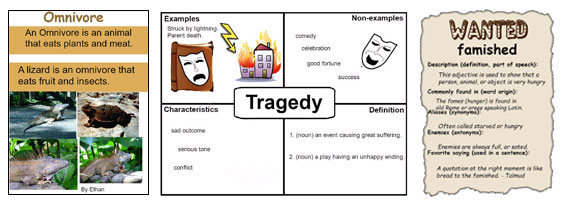
If your students get overwhelmed by the quantity of new words they encounter, ask each student to create a vocabulary trading card for a single term. After students complete a template you have assigned, they can print their work as trading cards, cut them out, and trade them with classmates for a complete set of new vocabulary.
Sentence Fluency
Fluency refers to the rhythm and flow of the writing. Students can use the recording feature to read their writing and hear the resulting rhythm and cadence. In addition to developing better oral fluency, having students record and listen to their own writing tends to help them identify problems with their punctuation, vocabulary, and word order.
Conventions
Conventions refers to how mechanically correct the spelling, punctuation, capitalization, grammar/usage, and paragraphing are in a writing passage. Students can use the spell check feature to check their writing on a page or in a project. You can also turn on an inline spell check in your teacher settings so that students in your class will see misspelled words as they are writing.
Presentation
Presentation refers to how writing looks on the page.
Is there enough white space?
Is the text large enough to read?
Do illustrations support the content?
Writing in our digital age is no longer text only and can involve digital storytelling, infographics, comics, and much more. These products provide an opportunity to engage students in a range of authentic writing activities that require them to think about how their writing will be "read" and interpreted.
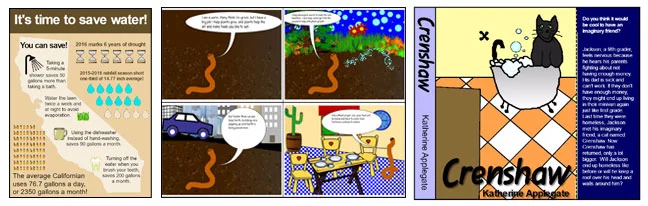
Using Wixie as a student writing tool helps you support students as they develop 6+1 traits in their writing and engages students in the writing process as they develop powerful digital-age communication skills.
 Effective Integration
 Instructional Design
 Learning Strategies
 Literacy
 Month-by-Month
 Product Ideas
 STEM/STEAM
 Share and Showcase
 Updates
 User Management