






Persuade with Emotional Appeals
Grades: 5-12
Persuade with Emotional Appeals
Students will build persuasive writing skills and media literacy as they explore techniques of propaganda and develop commercials that persuade viewers.
Engage
Propaganda exists around us in many forms. To help students move toward a strong understanding of how propaganda is used, work as a class to develop a definition, such as:
- Propaganda
- the use of a variety of communication techniques to create an emotional appeal to accept a particular belief or opinion, to adopt a certain behavior, or to perform a particular action.
Ask students to share examples of times they have seen or heard propaganda and how it affected them. Would knowledge of the practice of propaganda have changed the effectiveness of the message? Brainstorm reasons that leaders, organizations, and companies employ propaganda.
Introduce the various forms of persuasive communication referred to as propaganda. Some major forms are:
- Name Calling
- Linking a person or idea to a negative symbol. (i.e., commie, fascist, yuppie)
- Glittering Generalities
- Using virtue words; the opposite of name calling. (i.e., heroism, patriotism, family)
- Transfer
- Linking the authority or prestige of something well-respected and revered, such as a church or nation, to something they would have us accept. (i.e., a political activist closing an inflammatory speech with a prayer)
- Testimonial
- A celebrity promoting or endorsing a product, policy, or political candidate. (i.e., an athlete’s photo on a cereal box)
- Plain Folks
- Convincing the audience that a person or ideas is “of the people.” (i.e., a famous actress shopping for groceries)
- Bandwagon
- Making the appeal that “everyone else is doing it, and so should you.” (i.e., an ad that states “everyone is rushing down to their Ford dealer”)
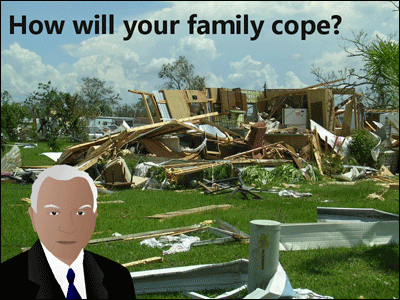
- Fear
- Playing on deep-seated fears; saying disaster will result if you do not follow a particular course of action. (i.e., an insurance company pamphlet that includes pictures of houses destroyed by floods)
Review and discuss each type of propaganda as a class. Then, gather video clips of propaganda techniques or find a series of ads in familiar magazines that demonstrate them, and work as a class to identify the different techniques used and discuss how effective they were.
Create
After students have completed their investigation of propaganda techniques, divide them into small groups. Ask each group to brainstorm a new product or service to be advertised in a commercial utilizing at least two propaganda techniques.
Then, have students brainstorm different ways they could use propaganda techniques to sell it. Once they have a broad list, the group should add details that describe how each technique might be applied to their product. Have them choose the two most effective techniques and formalize the script.
To help them better envision the commercials, have each team develop a storyboard that outlines what they will show and how the images, music, and illustrations will support the script.
When the scripts and storyboard are complete, have students start a new project to bring their commercials to life.
Have students use the drawing tools to illustrate their product or service and animate the objects and characters using talkies to match the script. They can use the talkies to record narration for the commercial and then add music to support the animation.
When students finish, have them click the Show button to watch their commercial come alive.
Share
Present the commercials to the entire class. As a class, identify the techniques of propaganda each team chose to employ. Discuss which techniques and commercials they felt were particularly effective. You might consider inviting community members working in marketing or advertising to give input on the commercials.
English Language Arts Standards
Speaking and Listening Standards
Comprehension and Collaboration
2. Integrate and evaluate information presented in diverse media and formats, including visually, quantitatively, and orally.
Presentation of Knowledge and Ideas
4. Present information, findings, and supporting evidence such that listeners can follow the line of reasoning and the organization, development, and style are appropriate to task, purpose, and audience.
5. Make strategic use of digital media and visual displays of data to express information and enhance understanding of presentations.
Knowledge of Language
3. Apply knowledge of language to understand how language functions in different contexts, to make effective choices for meaning or style, and to comprehend more fully when reading or listening.
Writing Standards
Production and Distribution of Writing
4. Produce clear and coherent writing in which the development, organization, and style are appropriate to task, purpose, and audience.
6. Use technology, including the Internet, to produce and publish writing and to interact and collaborate with others