
7 ideas for Earth Science learning in primary grades
Even your youngest learners can explore Earth Science with Wixie using templates that focus on geology, meteorology, oceanography, and astronomy or creating projects from scratch.
1. Five senses walk
Ask students to use their senses to describe how they feel when they are outside.
- Is it hot or cold?
- Do they feel a breeze?
- How does the soil look, or perhaps any grass or plants?
Take your tablets along and when you sit down, have students use the Five Senses Observation template to share their observations by drawing or adding pictures and text. Have them orally capture their observations by recording voice narration or a video clip.
2. Water Cycle Stories
Wixie's Water Cycle activity provides students with a space to showcase their understanding of the hydrologic cycle. Students drag arrows and labels to the correct position and add color and stickers to finish their model.
If your students are ready or prefer a more open-ended approach, have them design starting from a blank Wixie page.
Students can also write cycle stories that tell the story of the water cycle through the first-person perspective of a water droplet.
3. Newspaper Headline
Students can use Wixie to explore the structures and processes on earth. Nurture your student's budding inquiry to learn more about their world and research how events on earth can happen quickly or slowly. (2-ESS1-1).Once students have completed their research on events such as volcanic eruptions, earthquakes, or perhaps erosion, ask students to write an exciting headline for a news article to describe the information that they have learned.
4. Interviews a Celestial Body
Kick-off students' understanding of the moon phases using the Wixie's Phases of the Moon activity. Then, ask students to showcase their learning by interviewing the moon!
Students can start from a blank canvas or use an Interview template to showcase their learning.
Don't forget to share this fun project with your school community. With Wixie, it’s easy to share their work with their community. Each project saves as a unique URL. Copy the URL and share it on your school forum, or use the embed code to post on your school or class website.
5. Chart the Weather
Use Wixie to record your findings as you collect data about the weather as a class. Ask a new student each day to drag the icons to indicate the current weather so they can see and chart the weather patterns over time.
Encourage your students to think like a scientist by looking for patterns and order in their observations (K-ESS2-1). Promote classroom discussion with questions like:
- Is it warmer in the morning or afternoon?
- How many rainy days are there versus sunny days?
- Can the sun tell us the season?
Note: You can hide additional tools to better keep students focused and engaged on the data collection.
6. Modeling and Design Thinking
Young learners can, and want, to take an active role in solving problems! Encourage students to complete the engineering or design thinking process and present their ideas and processes for designing a "structure that will reduce the warming effect of sunlight on an area" (K-PS3-2).
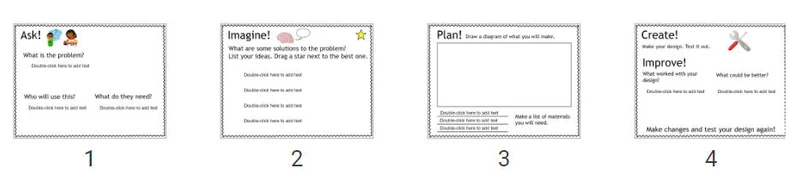
Students may even want to get started with an Empathy Map organizer to guide their work as they narrow down their solutions.
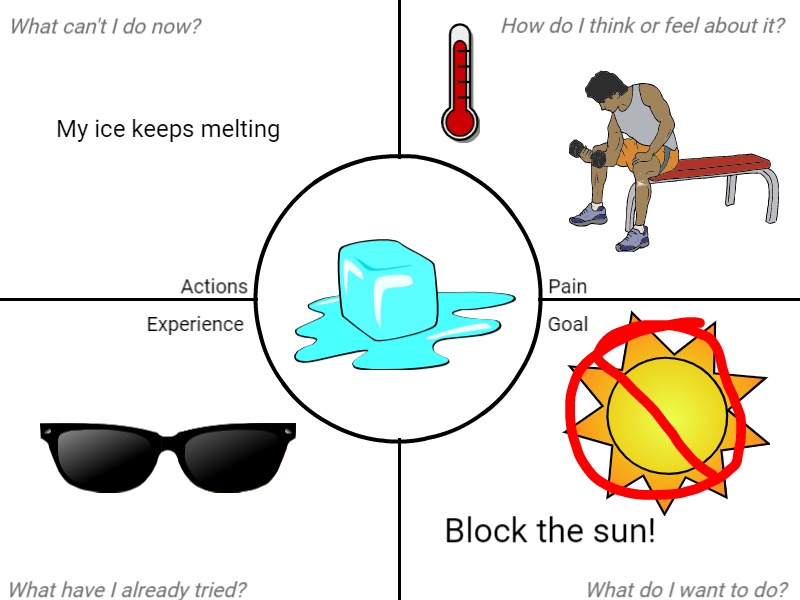
Producing an empathy map provides students with a big-picture view of their idea and provides you with a tangible artifact to assess student understanding.
7. Informational Documentary
Encourage your young students to use their emerging visual, oral, and written skills to raise awareness. For example, have students showcase information on various bodies of water and where they are located through a documentary (2-ESS2-2).
Students can use the Storyboard template to organize their thinking.
Start a new project from a blank page to transform the storyboard into a documentary.
Once their documentary is complete, students can export it as a movie to make it easy to share. Have students present to the rest of the class or host a film festival to showcase student documentaries with your community.