






Magical Metamorphosis
Grades: K-3
Magical Metamorphosis:
Butterfly Life Cycle Stories
Students explore the life cycle of a butterfly as they write and illustrate stories that show the stages of a butterfly’s metamorphosis.
Engage
Ask students if they have seen a butterfly and prompt them to describe what that butterfly looked like. Most will describe a butterfly in its adult stage.
Then, ask students if they have ever seen a caterpillar. Is that a butterfly? What about a chrysalis?
Read a story that includes the various stages of a butterfly’s life cycle, such as The Very Hungry Caterpillar by Eric Carle. Then, work as a class to identify the four stages of butterfly’s life cycle - eggs, caterpillar/larva, chrysalis/pupa, and adult.
To evaluate student understanding, assign a butterfly life cycle organizer.
The caterpillar in Eric Carle's story is hungry. Ask students to brainstorm other ways a caterpillar might feel, such as sad, happy, scared, angry, jealous, or brave. Might a butterfly's or caterpillar's feelings change at different stages of their life cycle?
Create
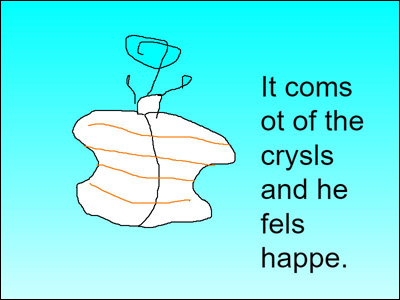
Tell students that they are going to write and illustrate their own butterfly life cycle stories! Revisit the list of feelings the class thought a butterfly or caterpillar could have. Have students choose one feeling to describe the main character in their story.
Assign the character/setting/events organizer to each student. Have them write the feeling in the top of the character box. Students can then brainstorm ideas for setting and events.
Completing a 4-stage cycle diagram organizer can also help students write about the stages correctly.
Suggest students create a page for each stage in the life cycle and have them write a first draft of their story.
Ask students to read their story and answer the following questions:
- Did I make each stage of life cycle of the butterfly clear?
- Will a reader like my story? Why?
- What pictures can I add to help tell the story?
Next, have students use a blank canvas to design their final book. When sentences have been added to each page, students can use the Paint tools to create illustrations for each page or add stickers from the Image Library.
students can use the microphone tools to record narration on each page of the story.
Share
If you are publishing hard copies, have students click the Print button and choose how they want to share the story.
If you are going share the books in digital form, have students export to video.
Next Generation Science Standards Grades
Life Sciences
K-LS1-1 From Molecules to Organisms: Structures and Processes
Use observations to describe patterns of what plants and animals (including humans) need to survive.
1-LS1-2 From Molecules to Organisms: Structures and Processes
Read texts and use media to determine patterns in behavior of parents and offspring that help offspring survive.
1-LS3-1 Heredity: Inheritance and Variation of Traits
Make observations to construct an evidence-based account that young plants and animals are like, but not exactly like, their parents.
2-LS4-1 Biological Evolution: Unity and Diversity
Make observations of plants and animals to compare the diversity of life in different habitats.