




Arcimboldo-Style Portraits
Grades: 2-12
Arcimboldo-Style Portraits
Students use images of everyday objects like fruits and flowers in Wixie to create Arcimboldo-style self-portraits.
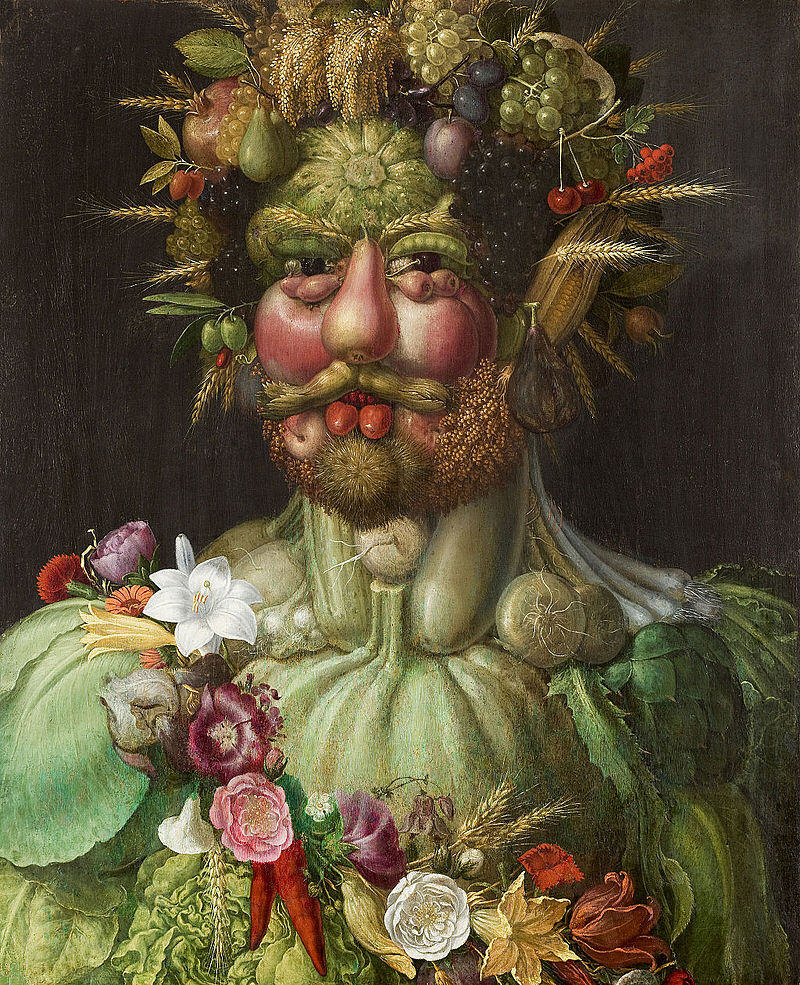
Share examples of Guiseppe Arcimboldo's work and discuss with your students how Arcimboldo used everyday objects to create composite portraits. Arcimboldo's The Librarian is made from a collection of books, Vertumnus includes fruit and flowers, and Earth is made up of animals.
Explore a painting, like Vertumnus, in depth. Work together to list the objects in this portrait. Talk about the body part each object represents, such as a facial feature or an article of clothing. Discuss if and how individual parts are related to each other.
The Vertumnus portrait of Rudolf II displays the symbolism inherent in Arcimboldo's choices of objects. For example, the use of vegetables in this portrait of the Hapsburg emperor is designed to show the abundance of life under his rule.
Tell students they will be creating self-portraits in Arcimboldo's style, using objects that represent their traits, interests, and experiences.
Assign a cluster or traits diagram to help them identify traits along with ideas for objects that represent them.
Assign the Arcimboldo template to provide an example, link to video, and canvas to create. Wixie's Image button provides access to thousands of objects they can use to build their portraits.
Print out student's self-portraits to display as an art exhibit in your classroom, school, or local business. Host a "Meet the Artist" event where students act as docents to share who Arcimboldo was, as well as explain how the objects in their self-portrait reflect their character traits, actions, and dreams.