
Create animations to give STEAM to STEM
Animation is a powerful way to connect students more deeply with the content they are learning. The popularity of animation, combined with its highly visual nature, appeals to students who don’t respond to more traditional forms of school, motivating them to push through the hard work of planning, sequencing, teamwork, and both writing and visual communication.
Science
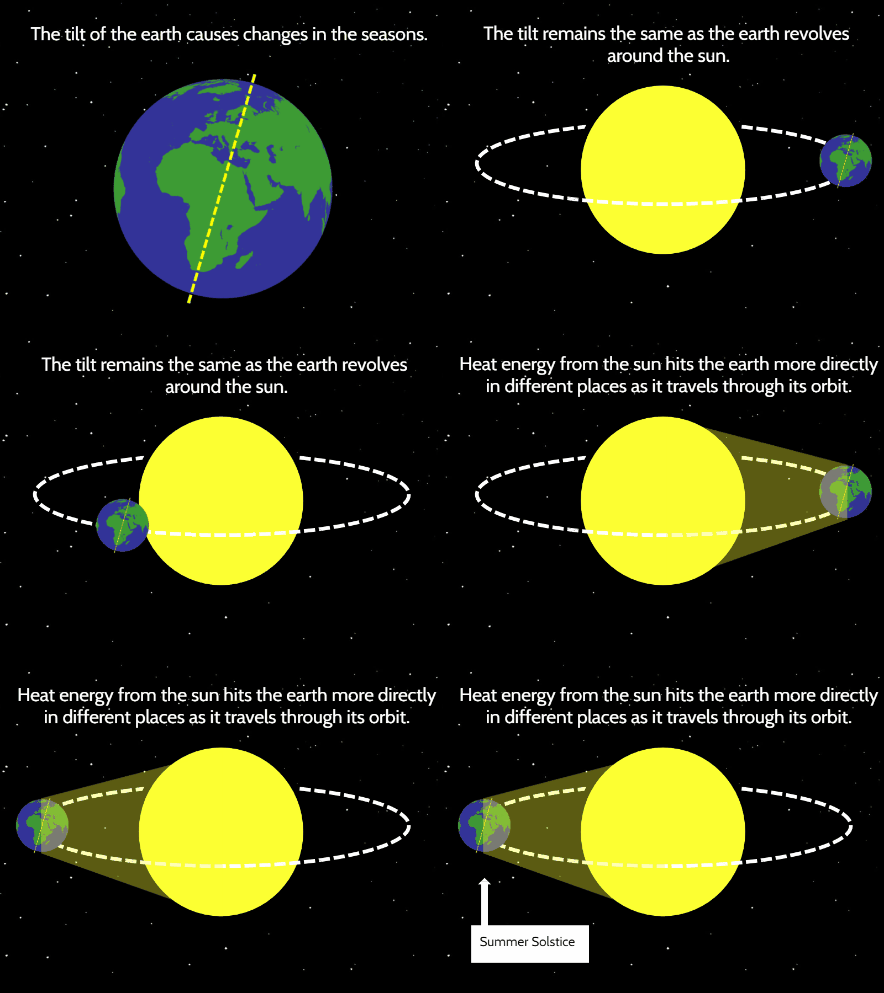
So much of science is microscopic or macroscopic. Animation can help students analyze and more deeply comprehend ideas and structures, as small as single-celled organisms or as large as a solar system.
Animating scientific processes requires students to break processes down into component pieces and "determine what factors are necessary for each step in the process and movement from one step to the next." The nonlinguistic representations required by animation also help students better understand content.
Technology
Because our students have grown up watching cartoons and animations, creating them is a powerful opportunity to empower them to create and not simply consume technology. Creating animation embraces creativity, but also requires computational thinking. To build an effective animation, students practice skills with:
- Data collection - define audience and gather information and media resources
- Data analysis - find patterns in information as well as differences
- Data representation - organize and sequence images and information
- Decomposition - define scenes and tasks as well as develop effective imagery
- Abstraction - determine most important object/feature to showcase with movement
Engineering
Engineering is the application of math, science, and past technologies to create new structures and tools that benefit society. While students can create animations about engineering or spaces they have designed, it is perhaps best used to help students develop the dispositions necessary for the iterative engineering process.
Creating animation rarely goes exactly as planned. Students create, preview progress, and constantly "tinker" to get the animation to play the way they want. Students also make constant changes and improvements based on discussions about goals and audience with their teammates or classmates - exactly the mindset needed for effective innovation.
Math
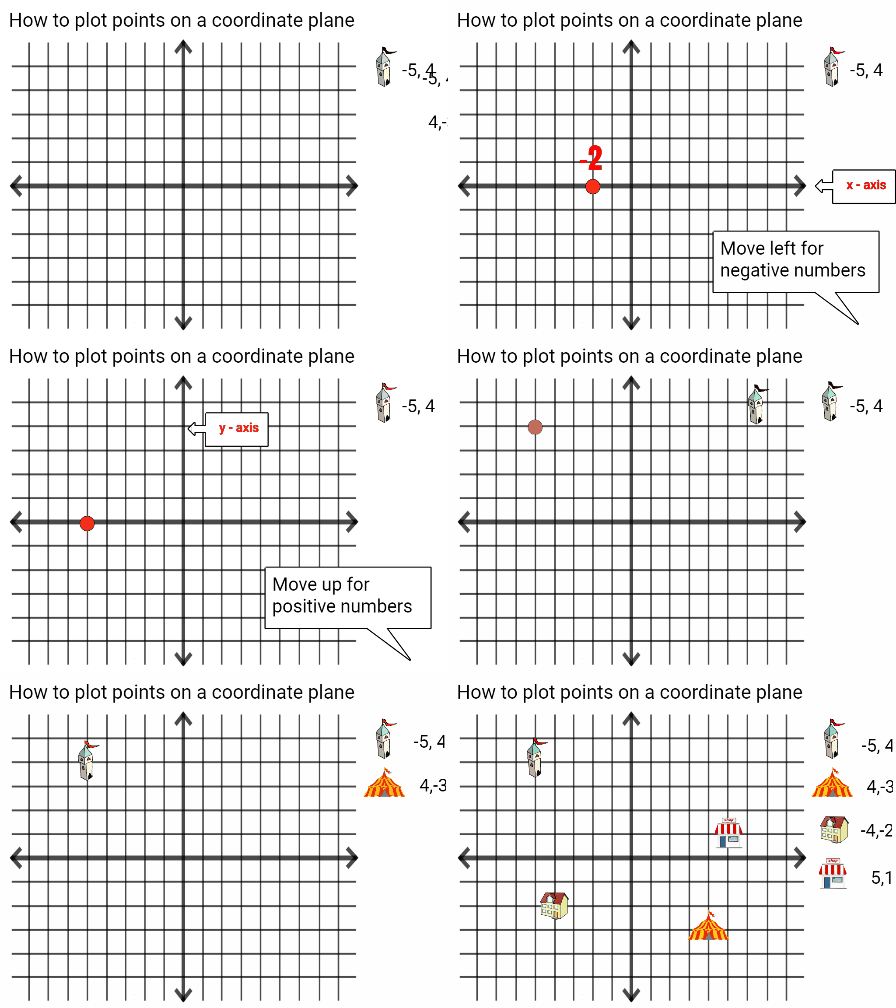
Like engineering, students can create animations about math topics and concepts, but it is the process of animation that helps students build, practice, and apply mathematical skills like logical thinking and sequencing. Students must organize their ideas and present images in an order that makes sense.
If students are creating animated GIFs, as opposed to exporting movie files, they are limited to the same timing on all frames. In order to show some frames for longer, they must calculate how many times to duplicate a frame so that a single scene shows longer than others.
Beyond STEM
Creating animations is a powerful form of visual communication, which is an essential digital-age literacy. Visual animations can provide opportunities for English language learners (ELLs) to demonstrate proficiency when language limitations don't allow them to showcase comprehension. Animations are powerful ways for all students to demonstrate understanding. For example:
- Art - how to effectively use elements like balance and contrast and portfolios of visual work.
- Language Arts - visual vocabulary, symbolism, or most important scenes in a story.
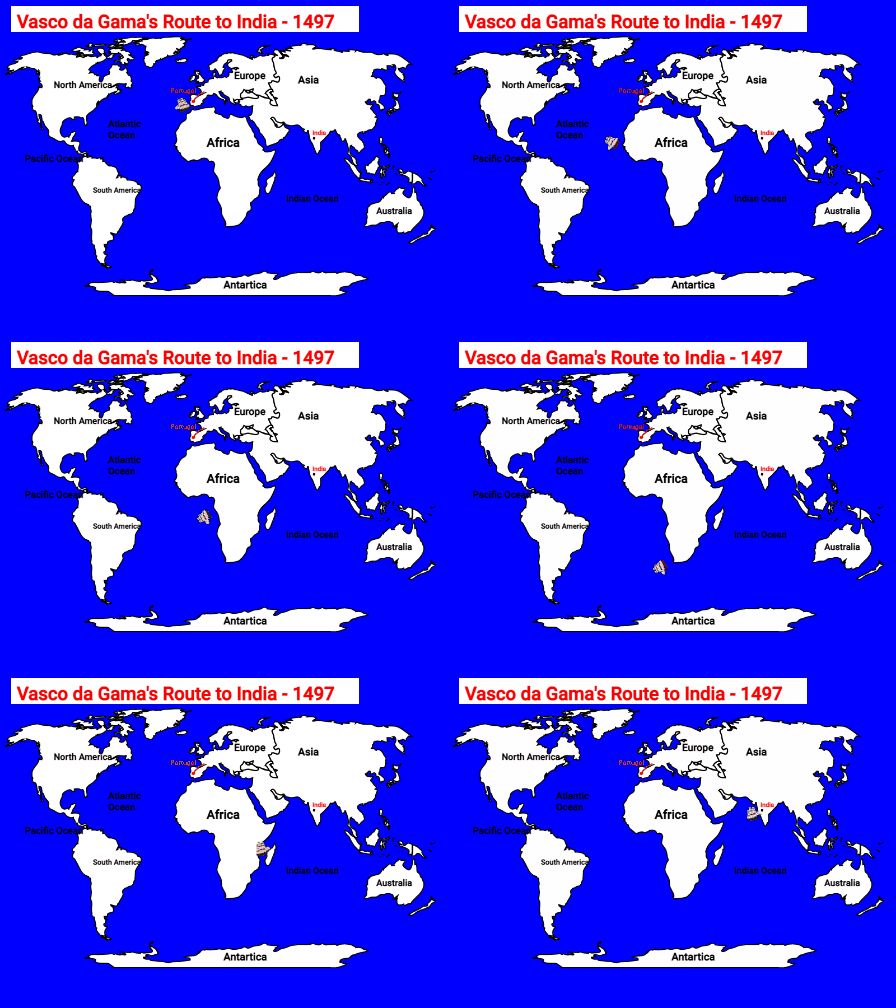
- Social Studies - routes of exploration or empire expansion and contraction.
Creating animations in Wixie
Simply add stickers and backgrounds from the Image library to quickly create animated GIFs in Wixie. Here's how:
Creating beautiful animations is the result of applying mathematical and artistic ideas like patterning and repetition, line, balance, perspective, and so on. Not only do students build comprehension as they work to develop animations for classroom content, their understanding is deepened as you watch, evaluate and discuss their work and the processes they used.
 Effective Integration
 Instructional Design
 Learning Strategies
 Literacy
 Month-by-Month
 Product Ideas
 STEM/STEAM
 Share and Showcase
 Updates
 User Management