
Eight ideas for creative book review projects
1. OREO-style Reviews
- Engagement: This method encourages students to think critically about their reading and organize their thoughts clearly.
- Ease of Implementation: The simple sentences organized in this fun format are great stand-alone reviews that are both easy to create and easy to read.
2. Use a Flip-style Video Response.
Engage learners with a Flip-style video-response approach.
- Target Audience: Tailored for different age groups, younger students (K-2) can share an opinion, while older students (3-8) can persuade others to read a specific book.
- Interactive Element: Recording a video adds a dynamic element to the book review process, allowing students to use technology creatively.
3. Use a Talkie
Talkies are animated magic stickers that read text, read a text object, or play a recorded sound.
- Creative Expression: This method allows students to share information about a book in an engaging and persuasive manner.
- Fun Factor: The interactive nature of talkies makes the book review process exciting and different from traditional writing assignments.
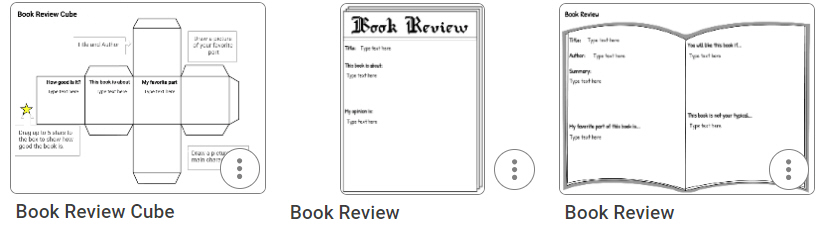
4. Take a 3D Approach with a Book Review Cube
Combine reading, writing, and making by having students craft their review on the sides of a cube.
- Hands-On Learning: Students can print their work on card stock, then cut out, fold, and glue to create review blocks.
- Classroom Display: These cubes can be shared in your classroom or library-media center, turning reviews into decorative learning tools.
5. Write a Friendly Letter or Email
Have students write a friendly letter or an email to recommend a book to a friend.
- Personal Touch: Encourages students to articulate their thoughts in a personal and relatable format.
- Writing Skills: This activity helps students practice their writing and communication skills in a real-world context.
6. Create an Advertisement
Create an advertisement for a newspaper or magazine with information and visuals that convince others to read the book.
- Persuasive Techniques: Students learn to use persuasive language and visuals to engage potential readers.
- Design Skills: This activity fosters creativity as students design an eye-catching advertisement.
Students can begin a New blank file in landscape or portrait orientation or use an article template.
7. Design a New Book Jacket
While the cover may entice a potential reader to pick up a new book, the summary and quotes from reviews normally found on the book jacket are often what convinces them to actually read the story.
- Artistic Creativity: Designing a book jacket allows students to use their artistic skills to visually represent their interpretation of the book.
- Critical Thinking: Students must summarize the book effectively, highlighting key elements that would attract new readers.
8. Develop a Book Trailer
Ask students to help you promote reading with a movie-style book trailer.
- Engagement: This activity turns a book review into a cinematic experience, encouraging students to think about pacing and storytelling.
- Technology Integration: Students can use video editing software to create trailers, enhancing their tech skills.
Instead of detailing what happens in the book, a book trailer shares information about characters and events in a story in a way that entices someone to read it.
By incorporating these diverse and engaging methods, students can experience book reports and reviews as enjoyable and creative tasks, sparking their interest and encouraging deeper engagement with the literature.
There are so many right ways to express and support an opinion; you simply need to choose the type that matches the level and interest of your learners.
We can't wait to learn your student's opinions about the books they have read.
 Effective Integration
 Instructional Design
 Learning Strategies
 Literacy
 Month-by-Month
 Product Ideas
 STEM/STEAM
 Share and Showcase
 Updates
 User Management